
Q&A: Preparing Optometrists for Oral Therapeutics
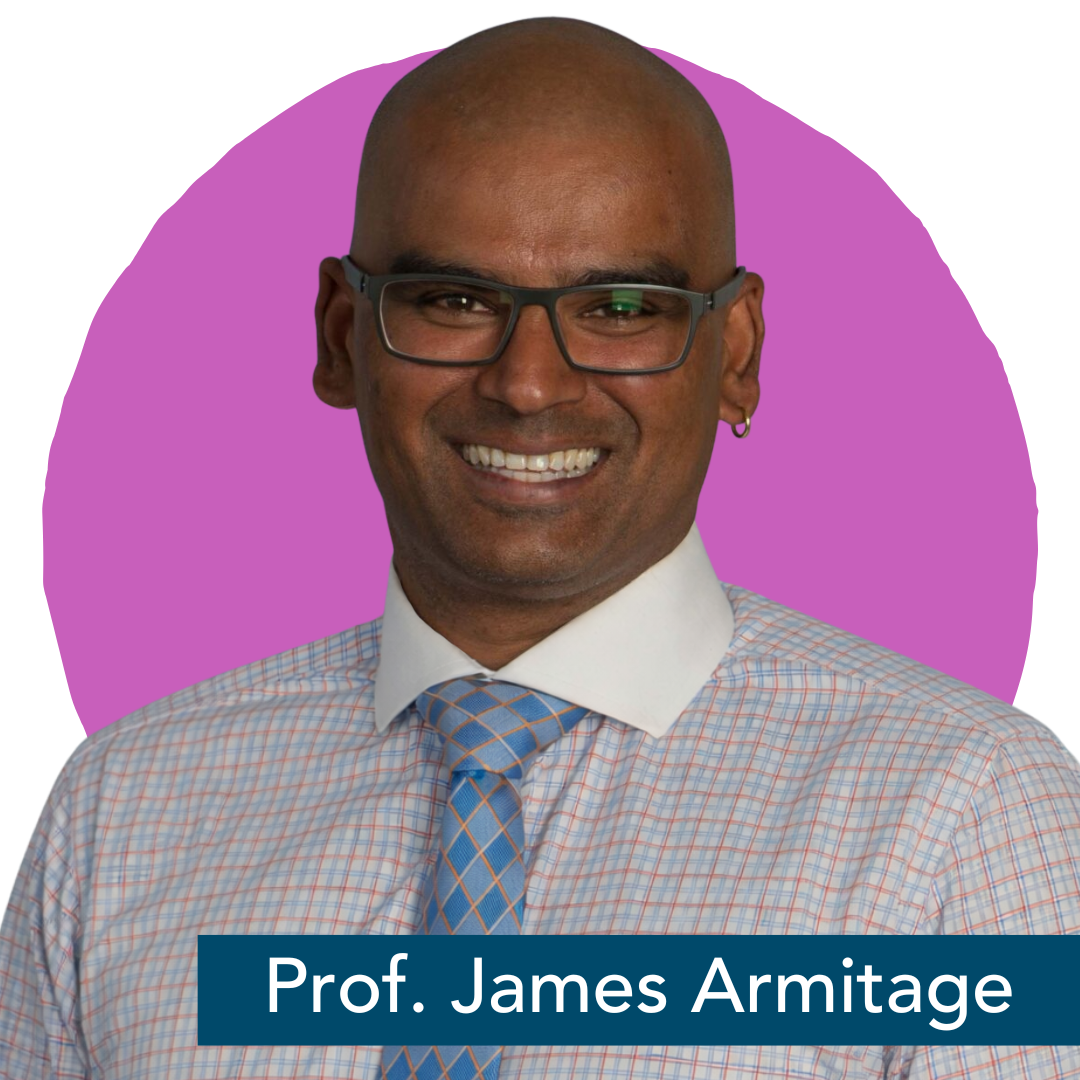
We caught up with Professor James Armitage, who will facilitate the live Team-Based Learning webinars in ACO's new Certificate in Advanced Ocular Therapeutics, to talk about the course, the shift toward oral prescribing, and what it means for the future of patient care.
Educational Philosophy & Teaching Methodology
Your research and teaching career has bridged vision science and broader systemic health questions. How has that shaped the way you approach teaching therapeutics to optometrists?
James: I started a PhD on the role of omega-3 fatty acids in vision, which ended up looking at the role of maternal omega-3 fatty acid intake on offspring cardiovascular and neural function. Subsequent postdoctoral research in the UK and Australia spanned vascular, metabolic and kidney health. Despite moving beyond optometry, I've always remained a practising optometrist.
When I came back to optometry teaching, I realised a lot of what I'd learnt over the years slotted right back into optometry teaching, because by understanding systemic physiology, it makes it easier to work out what's broken and what to fix. Rather than memorising signs, symptoms and treatment for every disease, you think: normal function, what's broken, is it inflammatory, infectious, or a both? That makes it easier to decide — stop this inflammation and things subside, or stop the infection and the inflammation subsides, and if it doesn't, adding a steroid once we have the infection under control if needed. I think it helps optometrists to think about the whole person, then work backwards — what’s broken, how do we fix it — rather than memorising “recipes”.
How does the course approach oral pharmacology, and why is this important given the potential changes to prescribing?
James: The course is saying there's a certain amount of knowledge you need, and depending on when you were trained, you might have had that in your undergrad or postgrad education. But the specifics of pharmacology or microbiology — if you haven't used them recently, you tend to remember the principles but forget the details. So we remind people of those details, give them the information to apply the knowledge and formalise it through Team-Based Learning; TBL.
You come to the TBL session having done your preparation — hence you do the individual readiness assurance tests — then apply that knowledge to a concrete, well-defined case. It's one thing to describe a volume of distribution, or draw a receptor agonist-antagonist curve, or define a KD50. But how do you apply that in the real world? The TBL assessment is an assessment for learning, not just of learning like an exam. You come with knowledge, test what you know, then work as a team to answer complex questions, teaching and learning from each other. Teaching someone confirms either you understand something well enough to explain it simply, or your knowledge is fragile — you knew the answer was C, but can't explain why, which tells you there's more learning to do. It lets people test their knowledge, share it, learn from peers, and apply it to a real-world scenario.
As professionals, we don't need to be told whether we've passed or failed. What you need, in adult education, is to say: what do I need to know, where am I strong, where am I not, and how do I fix that deficiency? Hopefully this course reminds people of that basic pharmacology, pharmacotherapy and toxicology — fundamental scientific principles you've learnt before but forget if you don't use them — and packages it up so you use that knowledge there and then, which formalises and consolidates it.
How does integrating biomedical science, clinical reasoning and communication skills create a more well-rounded clinician?
James: People still talk about soft skills — communications, clinical reasoning — but I'm insistent soft skills don't exist. Communications and clinical reasoning are core skills, just like our core muscles. We don't see them — if you're a really fit person, your core doesn't show up as massive biceps or pectoral muscles, but it's those core muscles that let you build up the big biceps, or whatever else you're after. Without core skills of communication and clinical reasoning, then all the knowledge in the world won’t help your patient. I think of it as a communication–reasoning–communication sandwich.
We need to communicate with patients to build trust and confidence, so they feel safe talking to us without holding back, and we need communication skills to match the person’s health literacy. We must be flexible — if we’re talking to a health professional, we use different language, ask questions differently, than to a 13-year-old interested in arts and history but not interested in science and medicine. We need to modify our communications skills to build trust and get information from patients.
In the middle of the sandwich, we need the clinical reasoning — we build a picture, develop a hypothesis, ask questions, run tests, arrive at a presumed diagnosis and a management plan. Then we need communications skills at the back end, to share that plan and make sure the patient’s happy with it and move forward collaboratively.
People often think shared decision-making just means asking, “what do you think, what would you like to do?” But without health literacy or training, how does the patient know which option is best? Shared decision-making isn't offering a choice of drugs and asking which they prefer — that doesn't help them. It's communicating complex information accessibly so the patient can decide whether the risk-benefit of a treatment is aligned with their values. Great communications and great clinical reasoning are the core of a good clinician.
Oral Therapeutics and Expanding Scope with Confidence
As optometrists' scope of practice broadens to include prescribing oral medicines, how much of a shift is this from current practice?
James: It could. We’ll have to wait and see what that legislation might look like, or what those guidelines look like. But fundamentally, optometrists already know a lot about the eye, and managing therapeutically has meant thinking about what those topical drops would do to other organs, not just the eye. Moving into oral medicines just means being more thoughtful about the systemic ramifications.
I don't think it's a huge shift, because we already think about it. Give someone a topical beta blocker for glaucoma, and we consider systemic health —asthma, heart block or heart failure, whether they're already taking systemic beta blockers. We're already thinking about systemically. The difference with an oral medication is being more explicit and formal in that systemic evaluation. It's formalising what we already do, and making it clearer to ourselves, and to anyone scrutinising our practice – that we are considering the systemic ramifications.
New Zealand optometrists have had prescribing rights for a number of years, but there's said to be an underutilisation of oral therapeutics there. What do you think a course like this means for confidence in prescribing?
James: I can't speak to why each New Zealand practitioner is or isn't using therapeutics, but I know that when students graduate and leave university, they're confident about how to prescribe. When they then become independent practitioners without a supervisor or mentor to fall back on, they tend to refer these cases out at the start— not because they don't know what they're doing, but because they don't necessarily have the confidence. And I don't think that's a bad thing: if an optometrist writes to the GP or the ophthalmologist and says, I think this person needs Xalatan at night because they've got glaucoma, and the ophthalmologist agrees, that reinforces that they knew what they were doing.
So, for New Zealand optometrists, who already have the ability to prescribe, perhaps part of the reason they're not using certain medications is that they're a little shaky on the pharmacology or the pharmacokinetics or haven't prescribed oral meds much — there's that fear of doing it and getting it wrong. This course is an opportunity to brush up on that knowledge, and to work with other like-minded individuals through these scenarios to build up the confidence. So, when the next patient comes in with episcleritis, and you intend to prescribe 800 milligrams of ibuprofen three times a day, you're also quite happy writing the script for 20mg of esomeprazole, because you know that much ibuprofen is irritating to the gastric mucosa. That's treating the whole person — not just their eye but recognising we're treating their whole body.
So, for New Zealanders who could already write the script but might not have the confidence to do so, this course can give them the confidence that they know what they're doing, that they're safe, and that it's in the patient's best interest to prescribe.
Health System Integration & The Future of Patient Care
Can you give an example of this holistic, whole-patient approach in practice?
James: At present we might diagnose a florid hordeolum and decide on conservative management because the patient is not keen to the pay a substantial gap to go to a GP to get a prescription for Keflex or Augmentin. With capacity to prescribe orals you can see the patient and say, “what would you like to do? — would you want to see if this resolves on its own? How about we review in a week, and if it hasn't, I’ll prescribe an antibiotic.
By showing good antimicrobial stewardship —first consider whether resolution will occur without medication but being ready to treat — because if it doesn't resolve naturally, it'll turn into a chalazion and encapsulate, and then lancing is required to drain.
You're also the optometrist who saw it in the initial stages, so you can judge resolution — the patient is better placed than if you'd referred it off to someone else, who then has to work out from scratch whether it's worth treating. I can think of several patients who were on long term Valtrex, changed GP and the GP didn’t renew the script and experienced reactivation. Whereas if one person is seeing them and taking care of them, as soon as there's any change, you can get on top of it. I think there's loads of opportunity for us as a profession to integrate with the health system, and that's probably key to our growth — more optometrists working actively in hospitals with GPs means we're adding the most value to the health system. That's another place where this is exciting: it's about enabling us to play better with other people within the health system.
What excites you most about how courses like this can shape the future of patient care?
James: My philosophy is that at the moment, there's a lot of 'we need scope improvement for us', or 'you can't do that scope improvement because it affects us' — ophthalmology, general practice, optometry, everyone thinking about themselves and how someone else's scope change affects them. I think we need to change that. Courses like this can get optometrists collaborating with other health practitioners, break down those barriers and get us thinking about how we can add the most value to our patients' eye care. They teach us how to operate at the maximum level of our training and really emphasise holistic care, because that's where we have the biggest opportunity to improve patient outcomes.
And when you improve patient outcomes, it becomes a lot easier for legislation to follow. I think it was Jim Timmons who said, you educate, then you legislate — you make sure you have a workforce with the capability to do these things, whatever guidelines end up being put around it. Once people have started doing it, momentum builds. That's what happened more than 25 years ago, when the first optometrists started practicing and learning about therapeutics before we had the legislation that enabled independent practice. It's developing the skill as a profession and sharing that skill — I think that's the real interesting and exciting part.
About the Certificate in Advanced Ocular Therapeutics
New in 2026, the Certificate in Advanced Ocular Therapeutics develops the pharmacological knowledge and clinical decision-making skills needed to prescribe oral medicines for eye conditions. Through interactive sessions with expert clinicians, the course enhances optometrists’ scope of practice and supports effective collaboration with other health professionals.
Commencing 27 July 2026. CPD pending. Learn more about this course.